The Meaning Behind the Hanami Festival: More Than Just Watching Cherry Blossoms
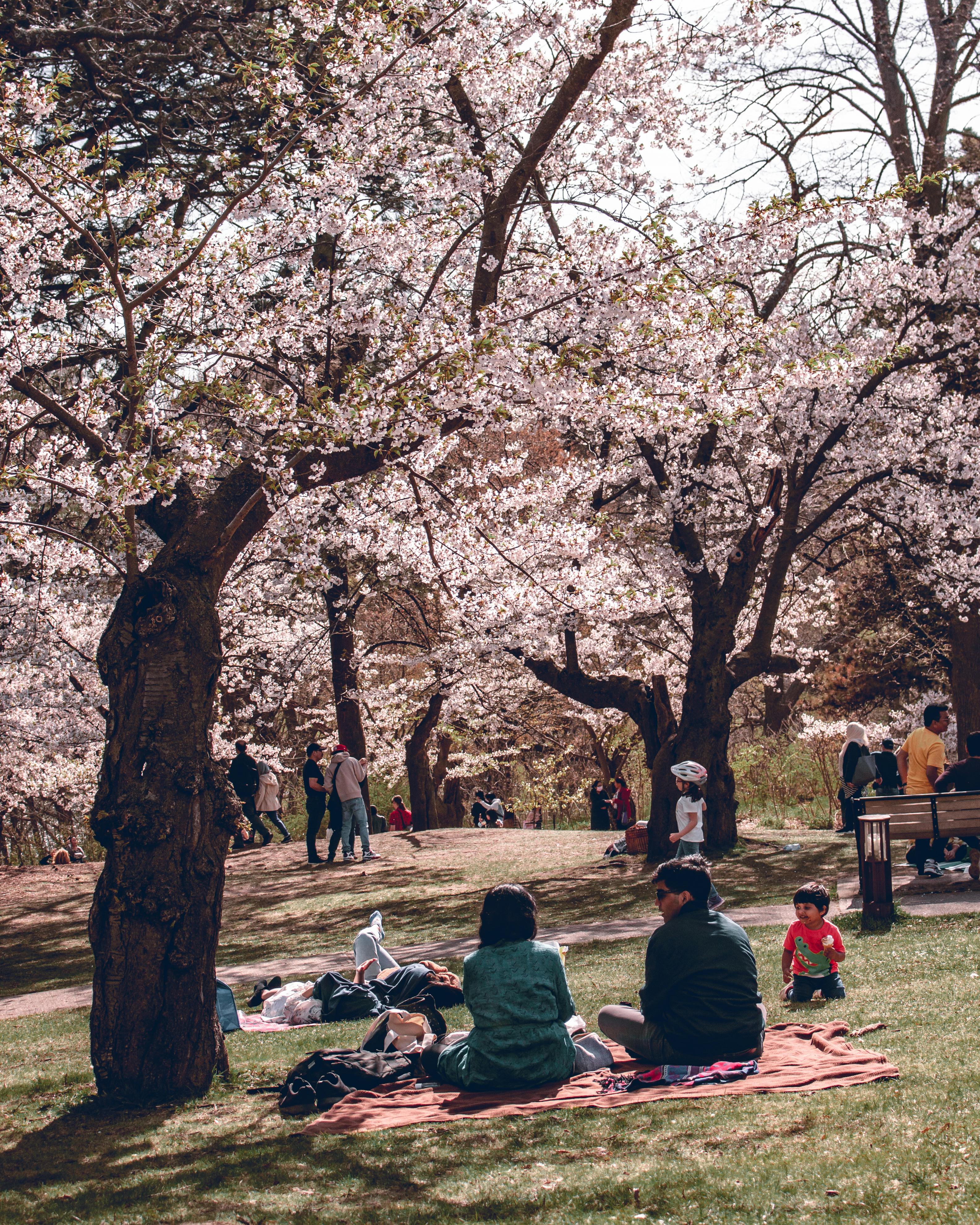
Every time spring arrives in Japan, the most anticipated sight is the blooming of cherry blossoms that adorn parks and city streets. Thousands of people gather under cherry trees, sitting on blue mats while enjoying food, drinks, and togetherness. This tradition is known as Hanami, which literally means “flower viewing.” However, Hanami is not merely a recreational activity or an annual event for taking photos under falling pink petals. For the Japanese people, this festival holds a deep philosophical meaning about life, time, and the connection between humans and nature. Behind its simple beauty, Hanami reflects cultural values that have endured for centuries in Japan.
The tradition of Hanami dates back to the Heian period (794–1185), when court nobles in Kyoto began treating flower viewing as a symbol of elegance and refinement. Initially, the flower that was revered was not the cherry blossom, but the plum blossom (ume), which blooms earlier in spring. However, over time, cherry blossoms that grow across various regions of Japan replaced ume as the main icon of spring. The nobles wrote poems about the impermanence of life while enjoying blooming sakura.
At that time, Hanami was not only a celebration of nature, but also an aesthetic and spiritual reflection, a way to contemplate the relationship between humans and time that continues to move forward. Since then, Hanami spread to all layers of society and became an important aspect of Japanese cultural identity.
In the modern context, Hanami has developed into one of the most popular festivals in Japan. Every year, the media broadcasts the sakura forecast, predicting the blooming period of cherry blossoms to help people determine when and where they can enjoy them at their peak. From Tokyo and Kyoto to Hokkaido in the north, each city has its favorite parks filled with visitors. Ueno Park in Tokyo, for instance, can host thousands of people who arrive early in the morning to “reserve a spot” under the cherry trees. Hanami picnics are usually accompanied by special foods such as bento, onigiri, and sake. But beneath the lively and cheerful atmosphere, Hanami still holds a strongly reflective side—a reminder that all beauty in life, like cherry blossoms, lasts only for a short time.
The philosophy most often associated with Hanami is the concept of “mono no aware,” a classical Japanese term that is difficult to translate directly, but means “an awareness of the impermanence of all things.” The beauty of sakura is felt precisely because it is fleeting. The flowers bloom for only about one to two weeks before falling in the wind. In that short time, people learn to appreciate the present moment without being attached to the past or anxious about the future. “Mono no aware” teaches that the sadness felt when something beautiful ends is a natural part of life, and that is where true beauty lies. Hanami, with all its festivities, is essentially a celebration of the cycle of life itself—birth, growth, decay, and return to nature.
Furthermore, Hanami also carries a very strong social meaning. The festival becomes a symbol of togetherness and solidarity among individuals in Japanese society. Amid busy routines and an intense work culture, Hanami offers everyone a chance to pause, relax, and spend time with their loved ones.
In urban traditions, it is common for companies to hold hanami parties as a form of collective recreation, where employees can joke freely without rigid hierarchical boundaries. Families, young couples, and the elderly gather in the same place, showing that the beauty of sakura belongs to everyone regardless of social status. Thus, Hanami becomes not only a celebration of nature but also a moment to strengthen social bonds and community connections.
However, the meaning of Hanami does not stop at nostalgia or togetherness alone. This festival also reflects how the Japanese view the balance between humans and nature. In traditional Japanese perspectives influenced by Shinto and Buddhism, humans are part of nature, not its rulers. The blooming of sakura is considered a form of communication from nature to humans, a reminder that every cycle of life has its own time. When flowers bloom, it is a time to be grateful, to enjoy, and to reflect on life’s journey. When flowers fall, it is a sign to accept change with an open heart. This perspective nurtures strong ecological awareness in Japanese culture, where the relationship with nature is maintained through simple yet meaningful symbols such as Hanami.
The uniqueness of Hanami also lies in its ability to adapt to the times without losing its essence. In the modern era, the festival is no longer limited to traditional picnics. Many cities in Japan hold night hanami or yozakura events, where cherry trees are illuminated with colorful lights that create a magical atmosphere at night. The younger generation blends the tradition with a digital lifestyle—uploading photos of sakura on social media, making travel vlogs, and sharing modern poetry about fleeting beauty. Although it appears different from the past, the core values of Hanami remain intact: appreciating time, celebrating simple beauty, and connecting people through shared moments. In the context of globalization, Hanami has even become a symbol of Japanese cultural diplomacy, introducing a peaceful and poetic philosophy of life to the world.
Beyond Japan, Hanami is now also celebrated in many countries that have cherry trees, such as South Korea, the United States, and Indonesia. In Washington D.C., for example, thousands of people gather every year around the Tidal Basin to celebrate the National Cherry Blossom Festival, commemorating the gift of 3,000 cherry trees from Japan in 1912 as a symbol of friendship between nations. This phenomenon shows how powerful Hanami’s appeal is as a universal cultural heritage. The beauty of cherry blossoms is not only Japan’s, but also a global message of peace, connection, and appreciation for life. Although adapted in different contexts, the essence of Hanami remains the same: teaching people to pause, look at a sky filled with petals, and feel the beauty in impermanence.
Ultimately, the meaning behind Hanami cannot be separated from the spiritual and social identity of Japanese society. It is a celebration, a reflection, and a prayer all at once. In every falling sakura petal, there is a subtle message about the journey of human life: every beginning must have an end, and every end gives birth to a new beginning. Hanami invites us to find beauty in simple things, to realize that time keeps moving, and that happiness does not need to be sought far away, but can be found in the briefest moments. More than just watching flowers, Hanami is the way the Japanese teach the world the art of living with awareness, grace, and deep gratitude.